
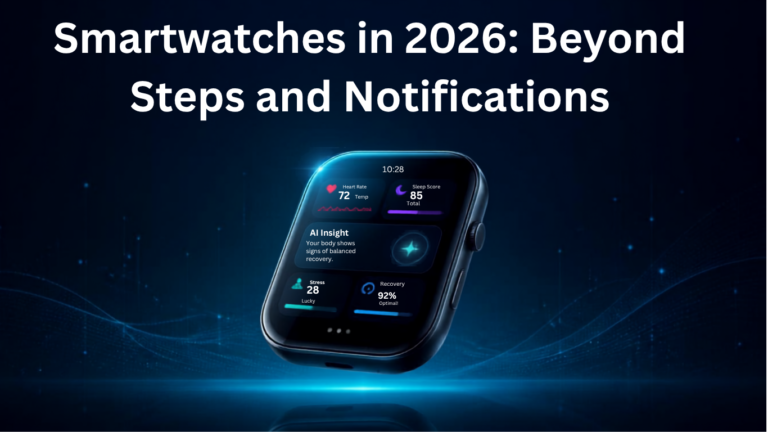
From fitness insights to health tracking and connected apps, smartwatches are becoming more useful—but what can they really do?
A smartwatch used to be little more than a fitness tracker with a screen. It counted steps, displayed notifications, and occasionally reminded you to stand up.
Today, that picture is changing.
Modern smartwatches are becoming more capable fitness companions, health-tracking tools, and extensions of our smartphones. They can help you understand your workouts, monitor everyday wellness, and stay connected without constantly reaching for your phone.
But with so many features and specifications, it is easy to assume that more data automatically means better health.
It doesn’t.
The real value of a smartwatch is not how many numbers it can collect. It is how well those numbers help you understand your habits and make better decisions.
In this guide, we’ll explore what smartwatches can do beyond steps and notifications, what their health features actually mean, and what you should realistically expect before buying one.
Smartwatches Are Becoming More Than Fitness Trackers
The biggest change in smartwatches is the shift from counting activity to understanding activity.
Earlier fitness trackers focused mainly on simple measurements:
- Steps taken
- Calories burned
- Distance travelled
- Basic heart rate
Modern smartwatches can combine several measurements to provide a broader picture of your activity and recovery.
For example, instead of simply telling you that you walked 8,000 steps, a smartwatch may also help you understand how active you were, how your workout affected your body, and whether you are recovering well.
This makes the device more useful for people who want to build consistent habits rather than simply chase a daily number.
The real upgrade: Smartwatches are moving from “How much did I do?” to “What does my activity tell me?”
1. Fitness Insights: From Counting Steps to Understanding Workouts
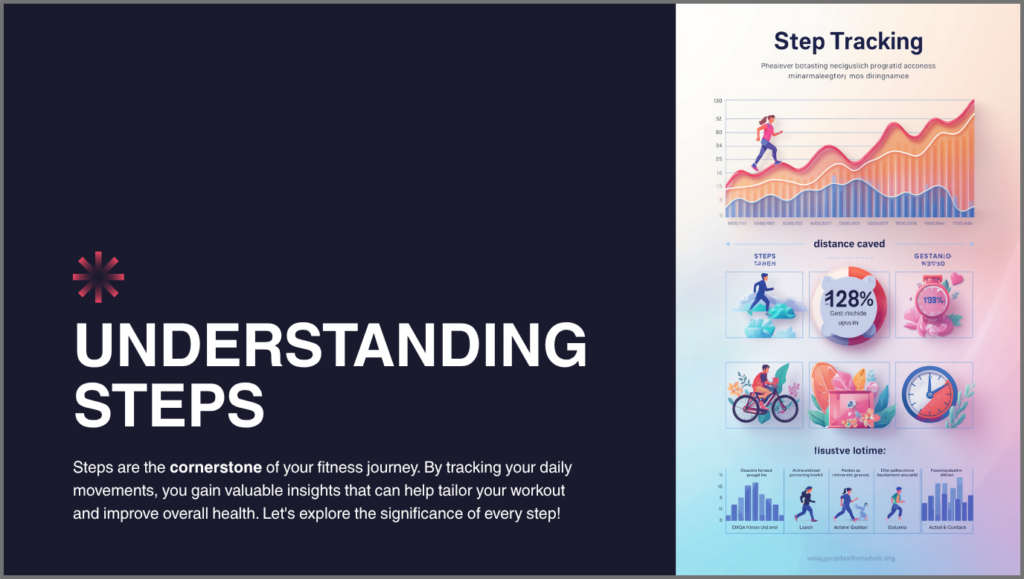
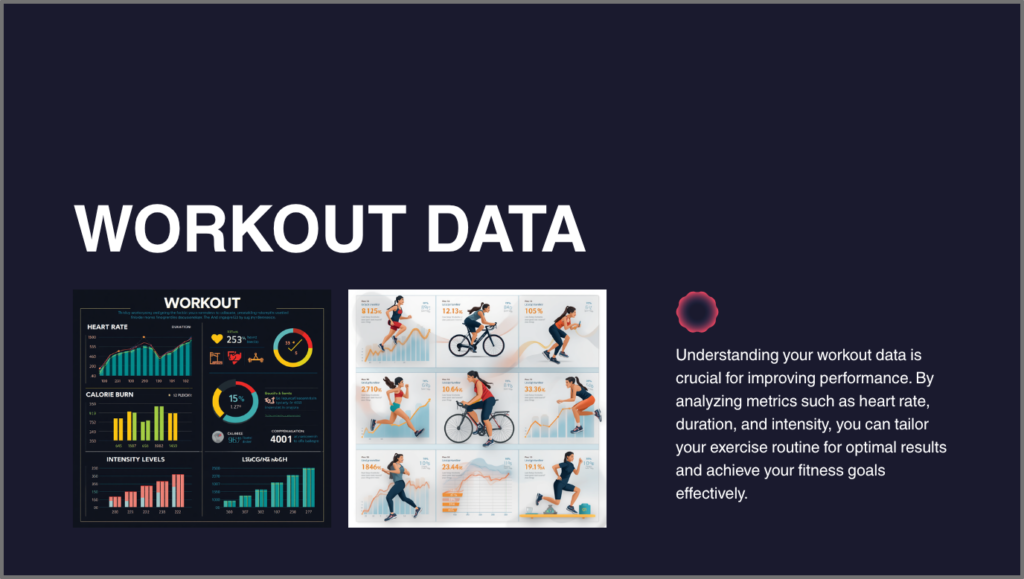
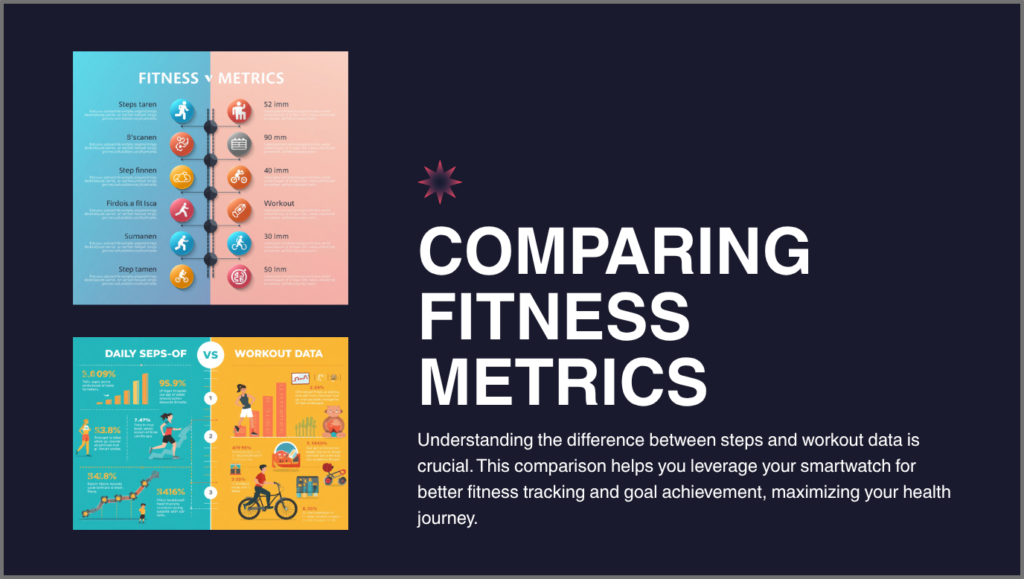
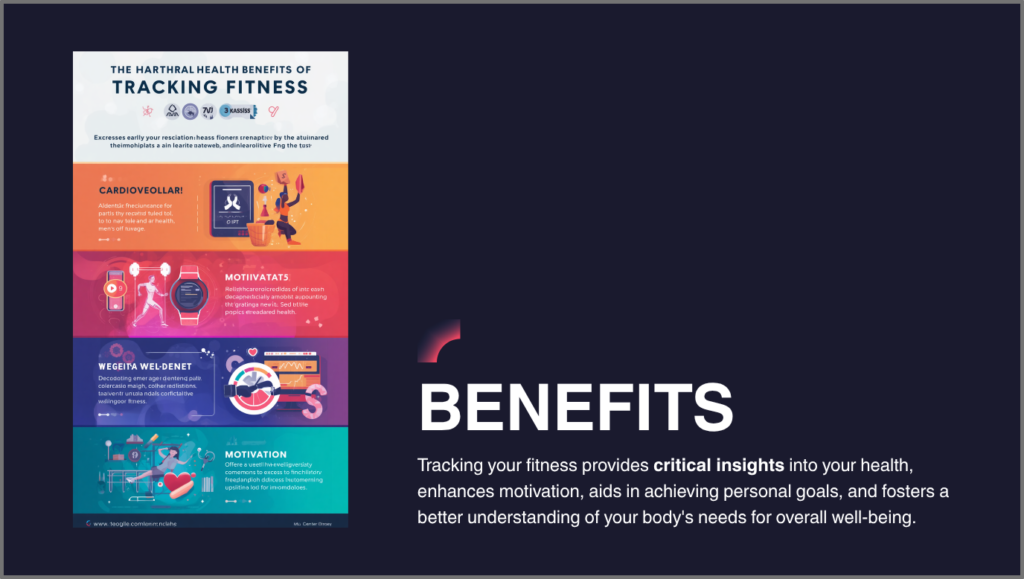

One of the most useful developments in smartwatches is the ability to turn workout data into fitness insights.
What can a smartwatch track?
Depending on the model, you may find features such as:
- Heart rate during exercise
- Workout duration
- Distance and pace
- GPS routes
- Calories burned
- Workout intensity
- Recovery-related metrics
- Training progress
These features can be useful for beginners, runners, cyclists, and people who simply want to become more active.
What are fitness insights?
Fitness insights are the information you get after the basic measurements are collected.
For example:
Basic tracking: “You walked 5 kilometres.”
Fitness insight: “Your walking pace has improved compared with your previous sessions.”
The second statement is more useful because it helps you understand progress.
Why this matters
A smartwatch can help you notice patterns that are difficult to remember on your own.
You may discover that:
- You are more active on certain days.
- Your workout intensity changes over time.
- You are consistently improving your pace.
- You are not allowing enough recovery between demanding sessions.
However, these insights are only useful when you understand what they mean.
A fitness score is a guide—not a final judgment on your health.
2. Health Features: What Can Smartwatches Really Tell You?
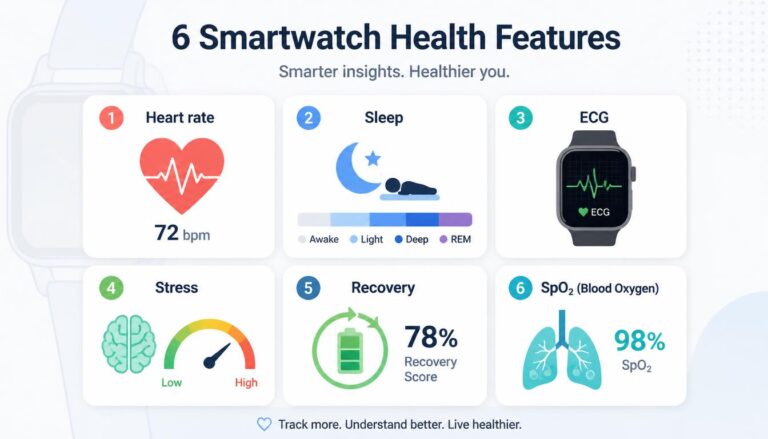
Health tracking is one of the biggest reasons people buy smartwatches today.
But it is important to understand the difference between tracking a measurement and diagnosing a medical condition.
Common health features
| Health feature | What it can help you understand |
|---|---|
| Heart rate | How your heart rate changes during rest and activity |
| Sleep tracking | Your sleep duration and selected sleep patterns |
| Blood oxygen | Oxygen saturation measurements, where supported |
| ECG | Electrical activity of the heart, on compatible models |
| Stress tracking | Changes in selected stress-related measurements |
| Recovery insights | Information that may help you plan rest and activity |
The important distinction
A smartwatch can provide useful information about your body, but it is not a replacement for a medical professional.
For example, a sleep score may help you notice that you are sleeping less than usual. It does not automatically explain why.
Similarly, a heart-rate measurement can be useful for tracking exercise, but it should not be treated as a diagnosis.
Think of health tracking as a window into your habits—not a medical report.
Why health features are becoming more popular
People are increasingly interested in understanding their everyday wellness.
Instead of waiting until something feels wrong, they want to notice patterns earlier and make healthier choices.
That is where smartwatches can be useful: they make health information easier to access and review.
3. Sleep Tracking: One of the Most Useful Everyday Features
Sleep is often overlooked when people talk about fitness.
But recovery is just as important as activity.
A smartwatch can help you understand:
- How long you slept
- When you went to bed and woke up
- How consistently you sleep
- Selected sleep stages, depending on the device
- Changes in your sleep patterns
Why sleep tracking matters
Imagine you are exercising regularly but still feeling tired.
Your smartwatch may help you notice that your sleep schedule has become inconsistent or that you are not getting enough rest.
That does not mean the device can explain every sleep problem. But it can help you identify patterns worth paying attention to.
What you should realistically expect
Sleep tracking is useful for general awareness and habit-building.
It is not a perfect measurement of everything happening during sleep.
Different devices use different sensors and algorithms, so results may vary.
Use sleep data as a helpful trend, not an absolute score of your health.
4. Connected Apps: Your Smartwatch Is Part of a Bigger Ecosystem
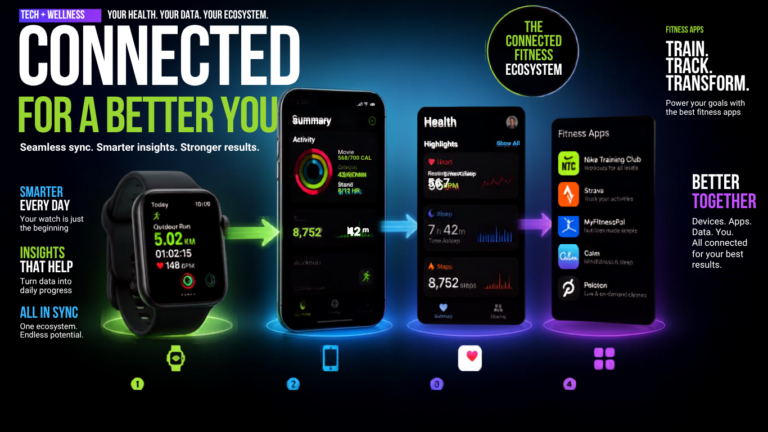
A smartwatch is no longer just a device on your wrist.It is part of a connected ecosystem that may include:
Smartwatch → Smartphone → Health app → Fitness apps → Other connected devices
This connection is what makes the device more useful over time.
What can connected apps do?
Depending on the platform and compatible apps, you may be able to:
- Review workout history
- Track long-term fitness progress
- Set goals
- View sleep trends
- Sync health information
- Control music
- Manage notifications
- Use navigation
- Connect with other fitness services
Why the app matters
The watch may collect the data, but the app often helps you understand it.For example, a single workout on your wrist may not tell you much. But reviewing several weeks of workouts can reveal useful patterns.
This is why choosing a smartwatch is also about choosing an ecosystem.A good smartwatch is not just about the hardware. The companion app can make a big difference.
5. Smartwatches and AI: More Personalized Insights
AI is becoming a bigger part of wearable technology.The goal is not simply to add an AI assistant to the watch. It is to make the information collected by the device more useful.
Why the app matters
Depending on the software, AI-powered features may help with:
- Interpreting fitness data
- Suggesting workout plans
- Summarizing health trends
- Providing personalized coaching
- Improving voice interactions
- Making connected apps easier to use
A simple example
Traditional smartwatch: “You completed three workouts this week.”
AI-assisted experience: “You have been consistent with your workouts. Consider a lighter session tomorrow if your recovery indicators suggest you need more rest.”The second experience is more personalized—but it still depends on the quality of the data and the software.
What to remember
AI-generated insights are suggestions, not guaranteed truths.
They should help you make better decisions, not replace your own judgment.
6. Notifications Are Still Useful—but They Are No Longer the Main Story
Notifications were one of the original reasons people bought smartwatches and they are still useful.You can check messages, see reminders, manage calls, and stay updated without taking your phone out of your pocket.
But the bigger opportunity is using the smartwatch to reduce unnecessary phone use.
For example, you may only need to glance at your wrist to see whether a notification is important.That can be more convenient than opening your phone and getting distracted by several other apps.
The balance matters
A smartwatch should help you stay connected—not make you feel constantly connected.That is why notification controls are important.
A good smartwatch experience is one where you can choose:
- Which apps can send notifications
- Which alerts matter
- When to use Do Not Disturb
- When to focus on your workout or rest
The best smartwatch is not the one that shows you everything. It is the one that shows you what matters.
7. What Should You Realistically Expect from a Smartwatch in 2026?
Smartwatches are becoming more capable, but they still have limitations.
What they do well
- Make fitness tracking convenient
- Help you understand activity patterns
- Provide useful everyday health information
- Keep you connected
- Support compatible apps
- Encourage consistent habits
What they cannot do perfectly
- Measure every health condition
- Replace professional medical advice
- Guarantee accurate results in every situation
- Automatically make you healthier
- Eliminate the need for a smartphone in every case
A practical way to think about it
Smartwatch = Information + Convenience + Better habits
The device can help you collect information and act on it.But the actual benefit comes from what you do with that information.
8. What Should You Look for When Buying a Smartwatch?
If you are planning to buy a smartwatch, focus on the features that match your lifestyle.
1. Fitness tracking
If you exercise regularly, look for the workout modes and tracking features you actually need.
2. Health features
Check which health measurements are available and whether they are supported in your region.
3. Battery life
Battery life matters because a smartwatch is most useful when you can wear it consistently.
4. App compatibility
Make sure the watch works well with your smartphone and the apps you use.
5. Comfort and design
A watch that feels uncomfortable may end up sitting in a drawer.
6. Price
Do not pay extra for features you will rarely use.
Buying tip: Choose a smartwatch based on your routine, not just its specification sheet.
Smartwatch vs Fitness Tracker: Which One Is Better?
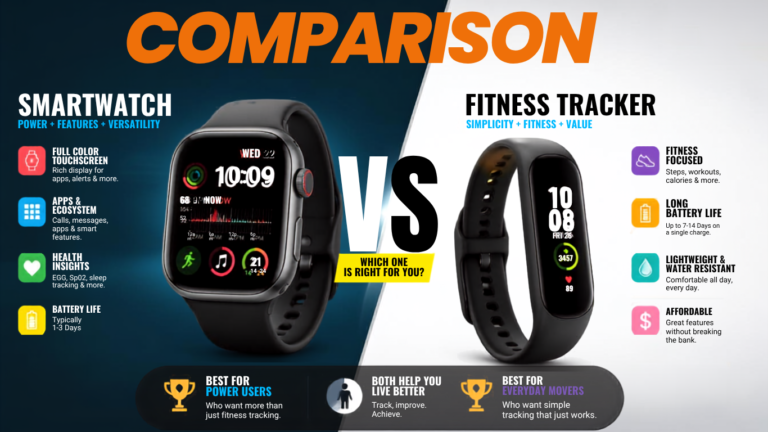
A smartwatch and a fitness tracker can both help you monitor activity, but they serve slightly different purposes.
| Feature | Smartwatch | Fitness tracker |
|---|---|---|
| Fitness tracking | Yes | Yes |
| Health insights | Often more advanced | Often focused on core metrics |
| Notifications | Usually more extensive | Usually more limited |
| Apps | Broader app support | More limited |
| Battery life | Often shorter | Often longer |
| Best for | Fitness + connectivity | Simple health and activity tracking |
If you want a device that combines fitness, health, and smartphone features, a smartwatch may be the better choice.
If you mainly want activity tracking and longer battery life, a fitness tracker may be enough.
Final Verdict: Are Smartwatches Worth Buying in 2026?
Smartwatches are becoming more useful because they are moving beyond simple step counting and notifications.They can help you understand your workouts, monitor everyday wellness, and stay connected through a growing ecosystem of apps and services.But the most important thing to remember is that more features do not automatically mean better health.
A smartwatch is a tool.It can help you notice patterns, build better habits and make everyday life more convenient.The best smartwatch is the one that fits your lifestyle, gives you useful information and helps you stay connected without becoming another source of distraction.
In 2026, the smartest smartwatch is not necessarily the one with the most features—it is the one that helps you make better use of your time, health, and technology.
Frequently Asked Questions
- What can a smartwatch do beyond counting steps?
A smartwatch can track workouts, monitor selected health measurements, provide fitness insights, connect with apps, and help you stay connected.
- Are smartwatch health features accurate?
Accuracy varies by device, feature, and usage conditions. Health measurements should be treated as useful information, not a replacement for medical advice.
- Can a smartwatch replace a fitness tracker?
Yes, for many users. A smartwatch can provide fitness tracking along with notifications, apps, and other connected features.
- Do smartwatches need a smartphone?
Many smartwatches work best with a smartphone, especially for setup, app syncing, and some connected features. Some models also support independent features such as cellular connectivity.
- Is a smartwatch worth buying in 2026?
It can be worth buying if you want convenient fitness tracking, health insights, and connected features. Choose based on your actual needs rather than buying only for the newest features.