
Introduction
Ever typed a question into an AI tool and gotten a vague, generic, or completely off-target answer? The problem usually isn’t the AI — it’s the prompt. Prompting is a skill, and like any skill, it follows patterns you can learn. This guide breaks down exactly how to write prompts that get you sharp, useful, on-target results — every time.
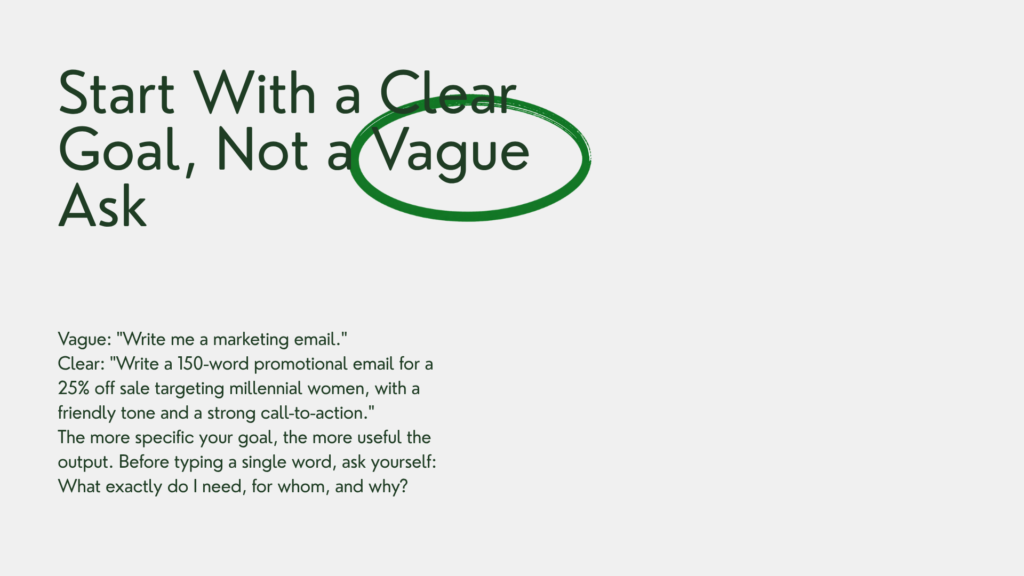
Step 1: Start With a Clear Goal, Not a Vague Ask
Before typing anything, ask yourself: What exact outcome do I want?
– ❌ Vague: “Write about marketing”
– ✅ Clear: “Write a 200-word LinkedIn post explaining the difference between organic and paid traffic, aimed at beginners”
Why it matters: AI tools respond to specificity. The clearer your goal, the less guessing the AI has to do.
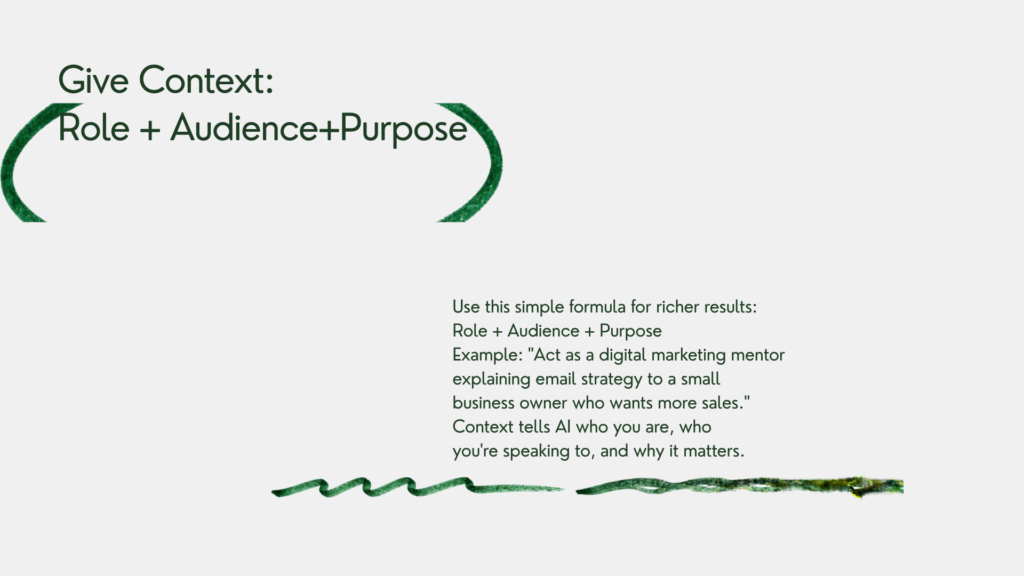
Step 2: Give Context (Role, Audience, Purpose)
AI performs better when it knows “who” it’s talking to and “why”.
Use this simple formula:
> “Act as a [role]. My audience is [who]. The goal is [purpose].”
Example:
“Act as a digital marketing mentor. My audience is beginners with zero experience. The goal is to explain lead generation funnels in simple, relatable language.”
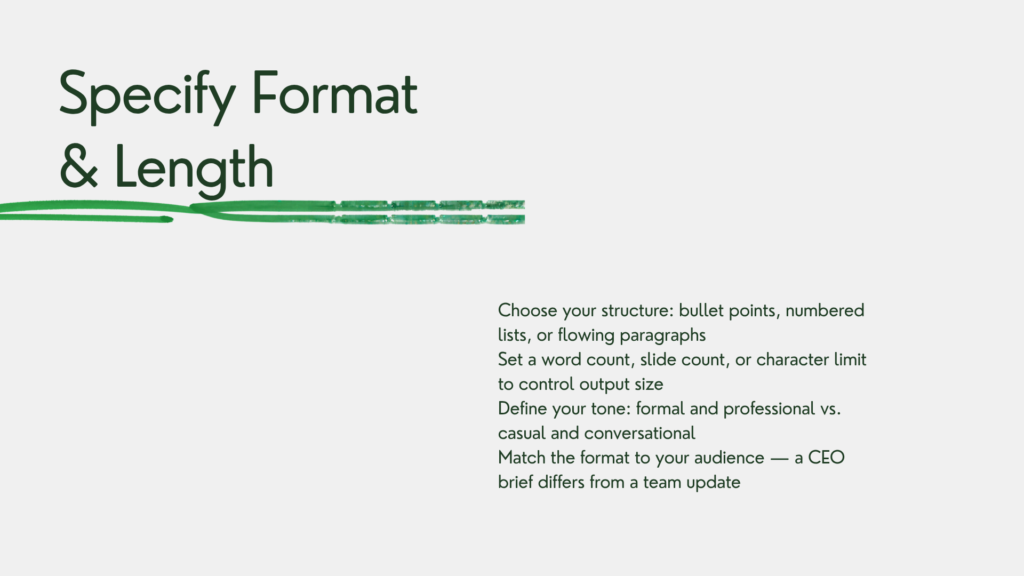
Step 3: Specify Format and Length
Don’t leave structure up to chance — tell the AI exactly how you want the output shaped.
– Bullet points or paragraphs?
– Word count or slide count?
– Formal tone or conversational?
Example:
“Give me the answer as 5 bullet points, each under 20 words, in a casual and friendly tone.”
Step 4: Use Examples When You Can
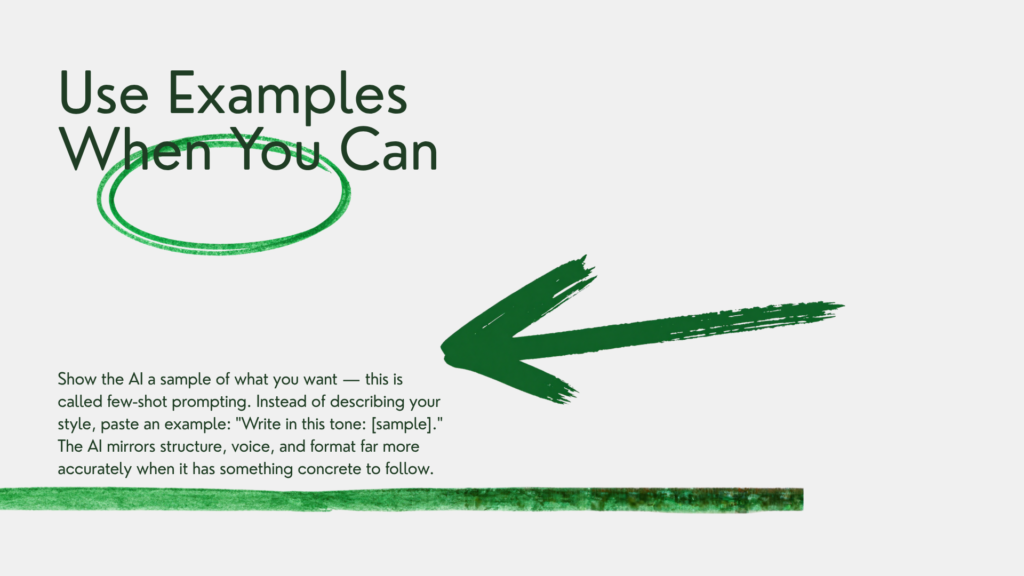
If you have a style or format in mind, show the AI an example. This is called few-shot prompting, and it dramatically improves accuracy.
Example:
“Here’s a sample of my writing style: [paste a short sample]. Write a new post in this same style about AI tools for marketers.”
Step 5: Iterate — Don't Settle for the First Answer
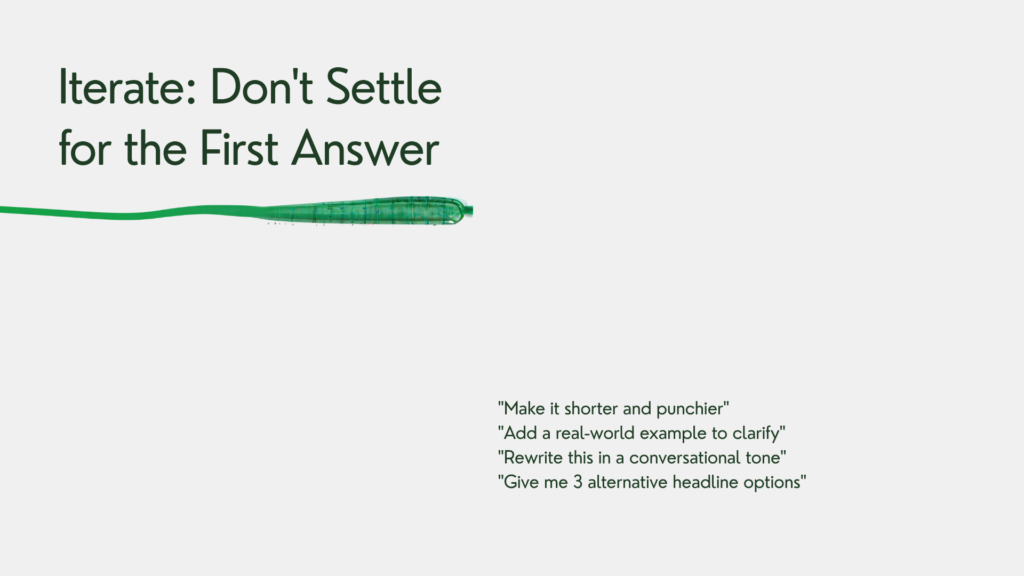
The first response is a draft, not the final product. Treat prompting as a conversation:
– “Make this shorter.”
– “Add a real-world example.”
– “Make the tone more conversational.”
– “Give me 3 alternative headlines.”
Why it matters: Refining a prompt across 2-3 turns almost always beats trying to write the “perfect” prompt on the first try.
Step 6: Break Big Tasks Into Smaller Prompts
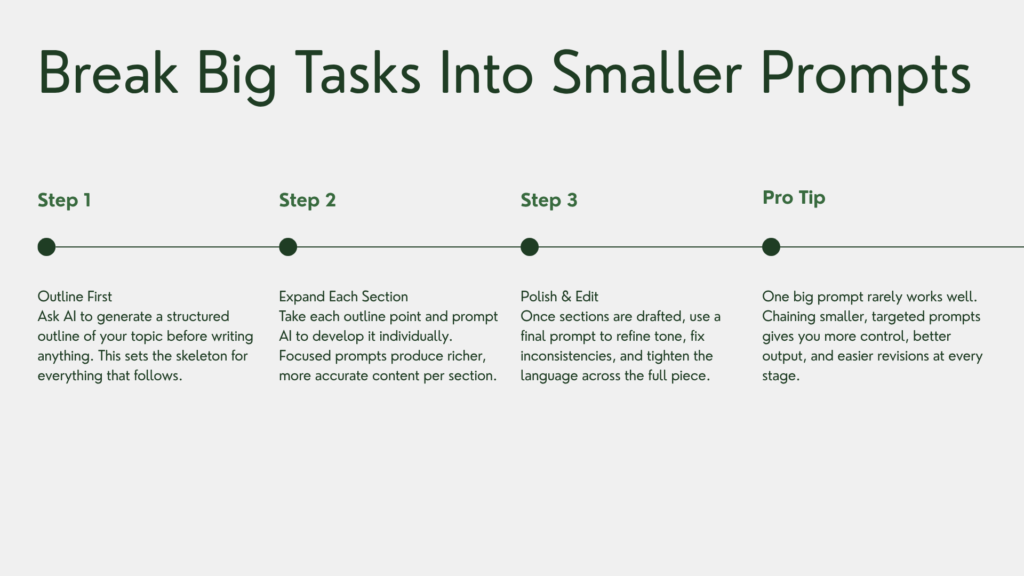
If you’re asking for something complex (a full blog post, a content calendar, a strategy doc), break it into stages instead of one giant prompt:
1. First, ask for an outline
2. Then, ask it to expand each section
3. Finally, ask for a polish/edit pass
This gives you more control and better quality at each stage.D
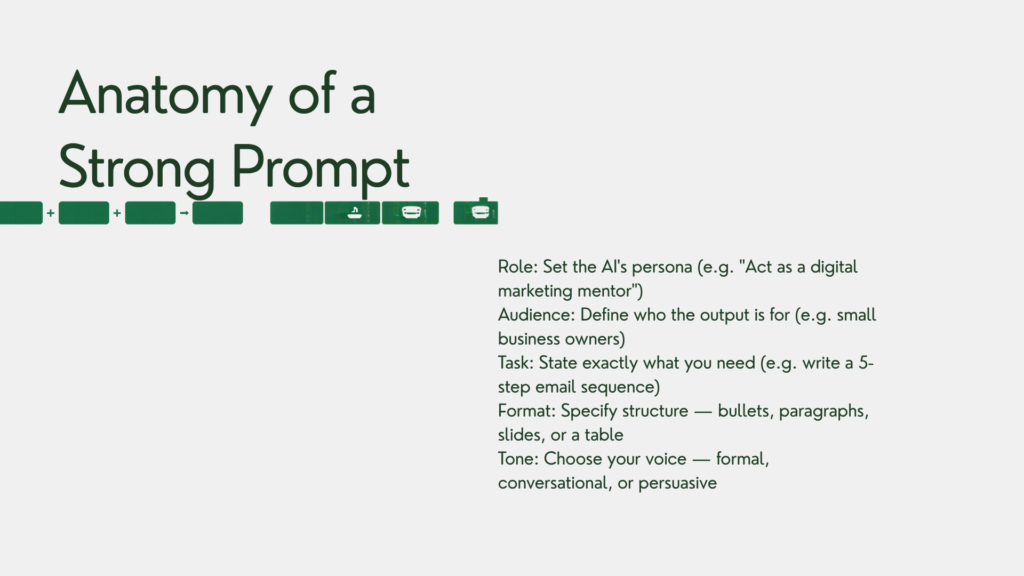
Quick Reference: The Anatomy of a Strong Prompt
| Element | Example |
|---|---|
|
Role |
Act as a social media strategist |
|
Audience |
for small business owners |
|
Task |
write Instagram caption ideas |
|
Format |
as a numbered list, under 15 words each |
|
Tone |
friendly and upbeat |
Common Mistakes to Avoid
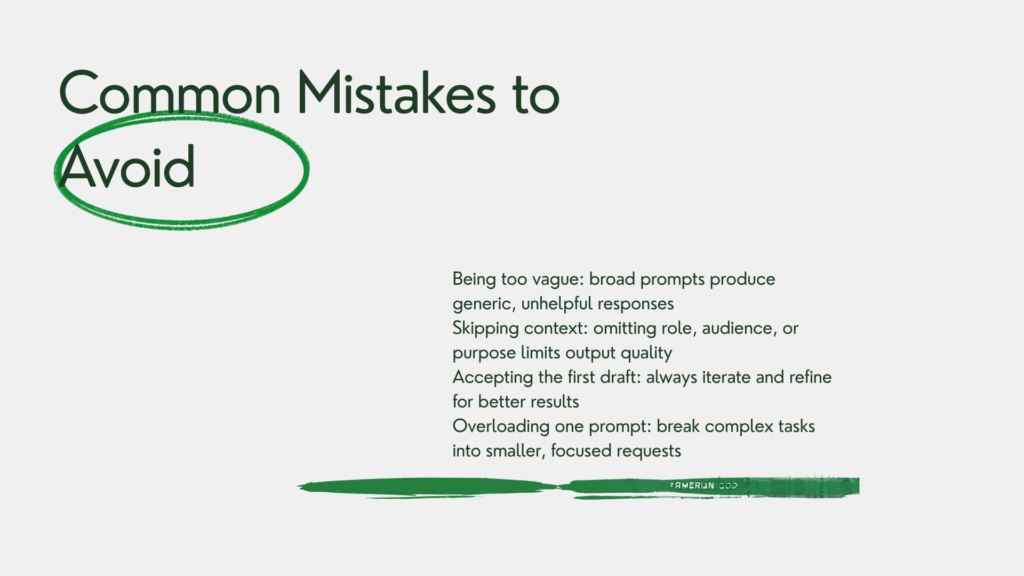
– Being too broad — “Tell me about AI” gives you a generic essay, not useful insight.
– Skipping context — the AI doesn’t know your audience unless you tell it.
– Accepting the first draft — always push for refinement.
– Overloading one prompt — trying to ask for 10 things at once dilutes quality.
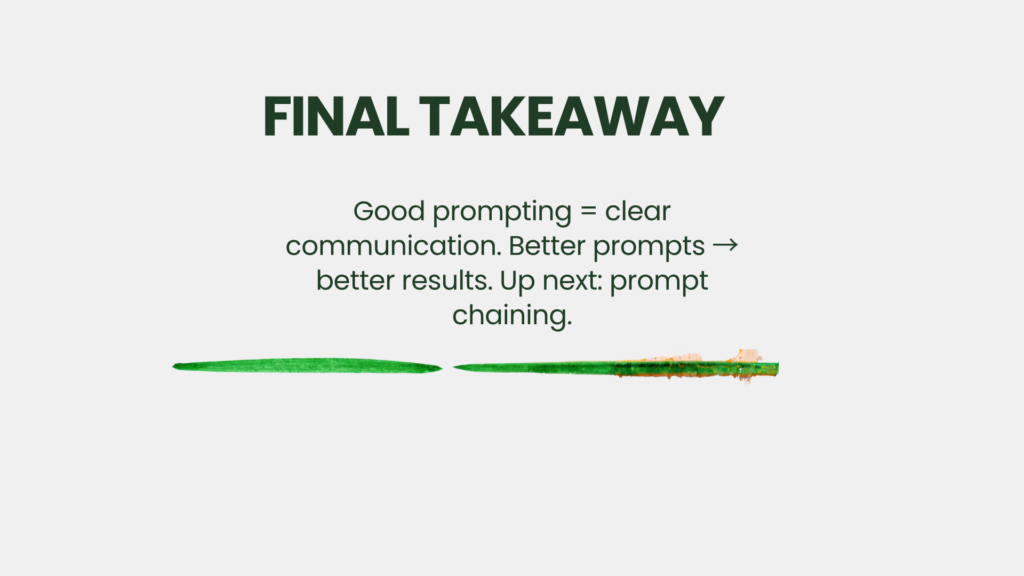
Final Takeaway
Good prompting isn’t about “tricking” AI into better answers — it’s about communicating clearly, the same way you would with a human collaborator. Give context, be specific, iterate, and treat every prompt as a conversation rather than a one-shot request.